The Met Gala 2026 theme, ‘Costume Art,’ challenged designers to treat the human form as a conceptual canvas. To engage with the body as an active participant- interacting, moving and living alongside fashion.
Right on theme, we saw the red carpet split into three distinct artistic interpretations: The Classical (the illusion of skin and controlled exposure), The Anatomical (mapping the internal systems of muscle and bone), and The Underrepresented (challenging traditional ideals of beauty).
While a theme of this scale always risks slipping into theatrical mimicry, a few visionaries truly delivered- interpreting the human form structurally, culturally and emotionally.
Here are our atelier observations from a night where craftsmanship became the ultimate dialogue.
The Celestial Canvas
Robert Wun x Beyoncé
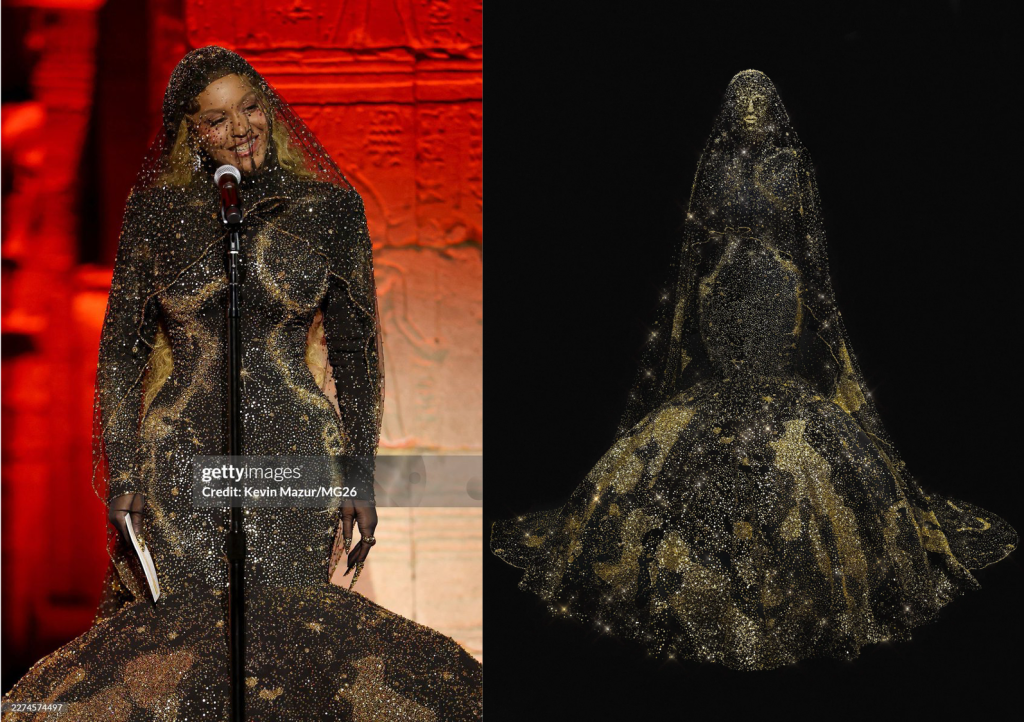
Designed for her second look of the night, this figure-hugging gown and cascading veil portrays a striking cosmic perspective. The design mimics the view of looking down from space, capturing the image of a golden coastline gleaming beneath a pitch-black night sky.
Tracing the body’s natural contours with clusters of midnight black and radiant gold crystals, the hyper-detailed beadwork maps the wearer’s face directly onto the veil.
It stands as a definitive triumph of “Costume Art,” seamlessly fusing human anatomy with the grand scale of the galaxy.
It features 3,180,000 individual embroidery stitches across 4,340 hours of handwork- the most labour-intensive look in the brand’s history.
The Structural Illusion
Robert Wun x Lisa
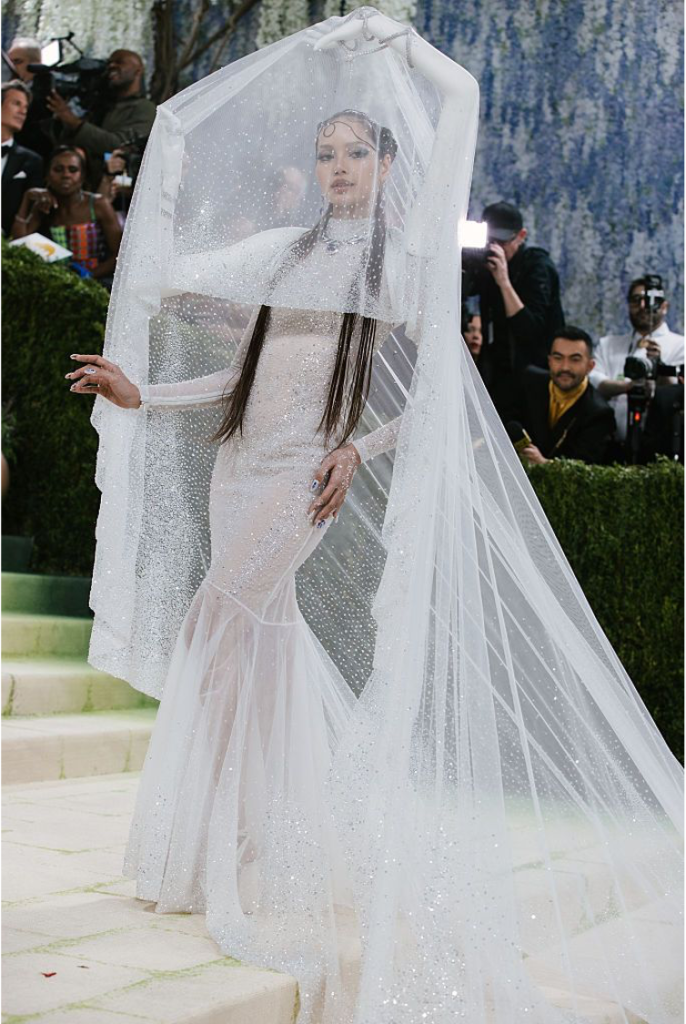
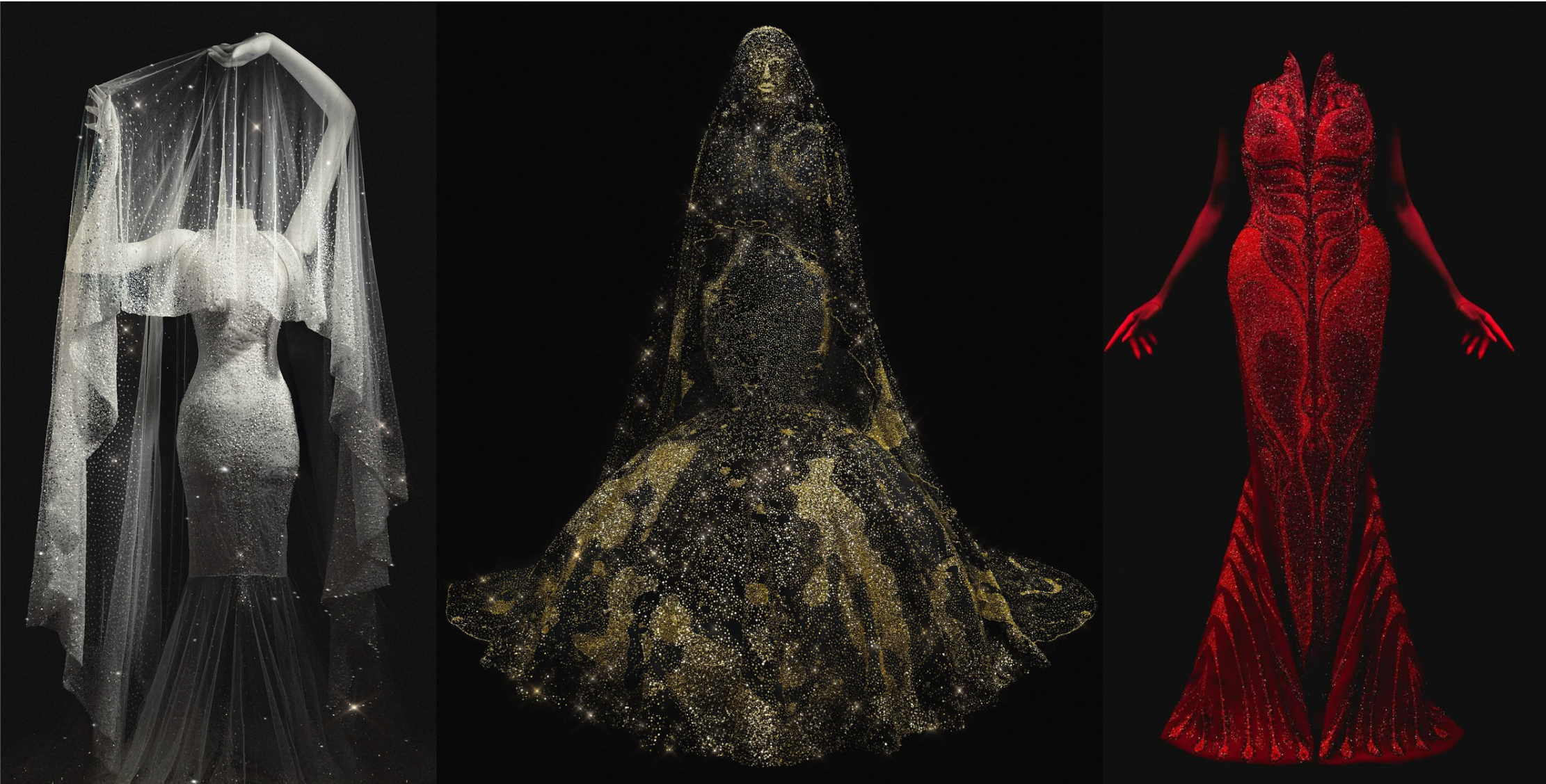
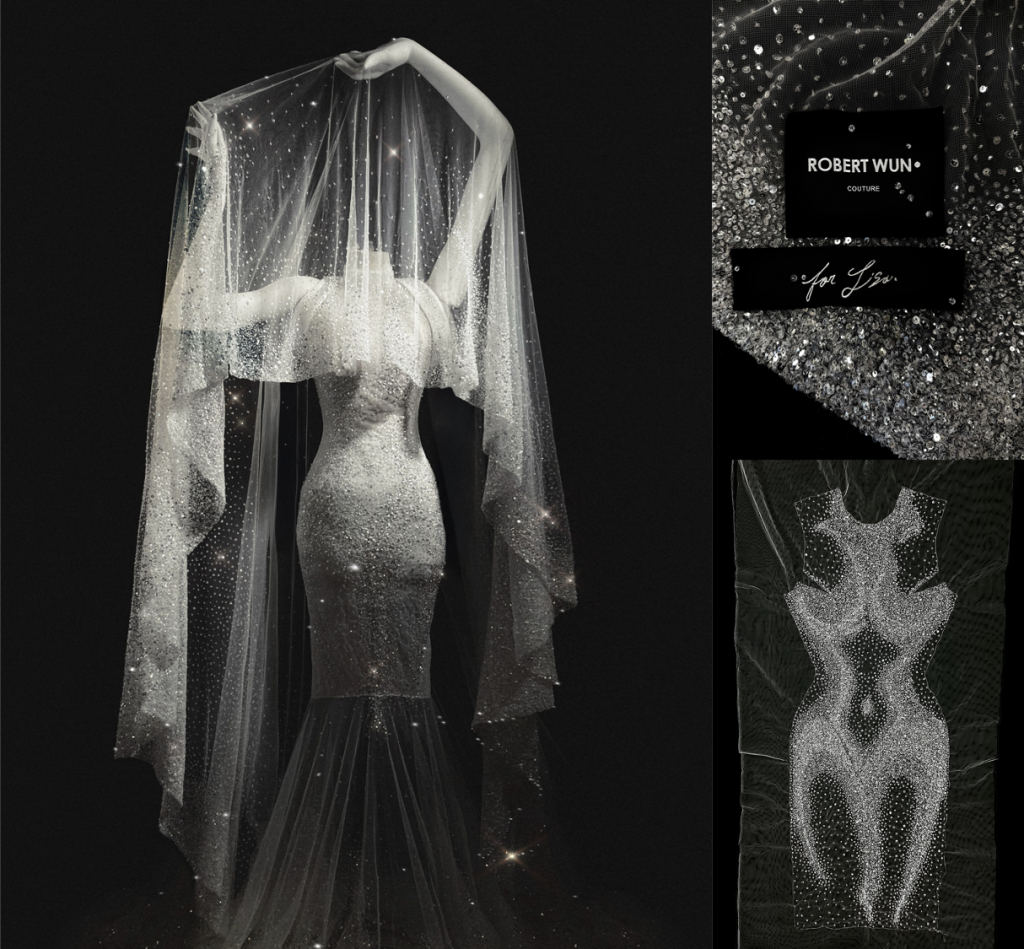
Poetically titled “A Frozen Sculpture Lifting her Veil,” this custom look transformed Lisa into a classical masterpiece.
With 3D scans of her actual arms, the couturier created sculptural extensions arranged in a pose inspired by traditional Thai dance positions- a subtle, deeply personal nod to her heritage.
It is a flawless execution of The Classical interpretation, a trompe-l’œil approach with a touch of the theatrics. The sheer tulle gown features crystals tracing the contours of the human form, creating an illusion that plays beautifully with light and transparency.
From an embroidery standpoint, the gown and veil are crafted with 66,960 white Swarovski crystals, requiring 2,860 hours of handwork.
The Anatomical Story
Robert Wun x Naomi Osaka
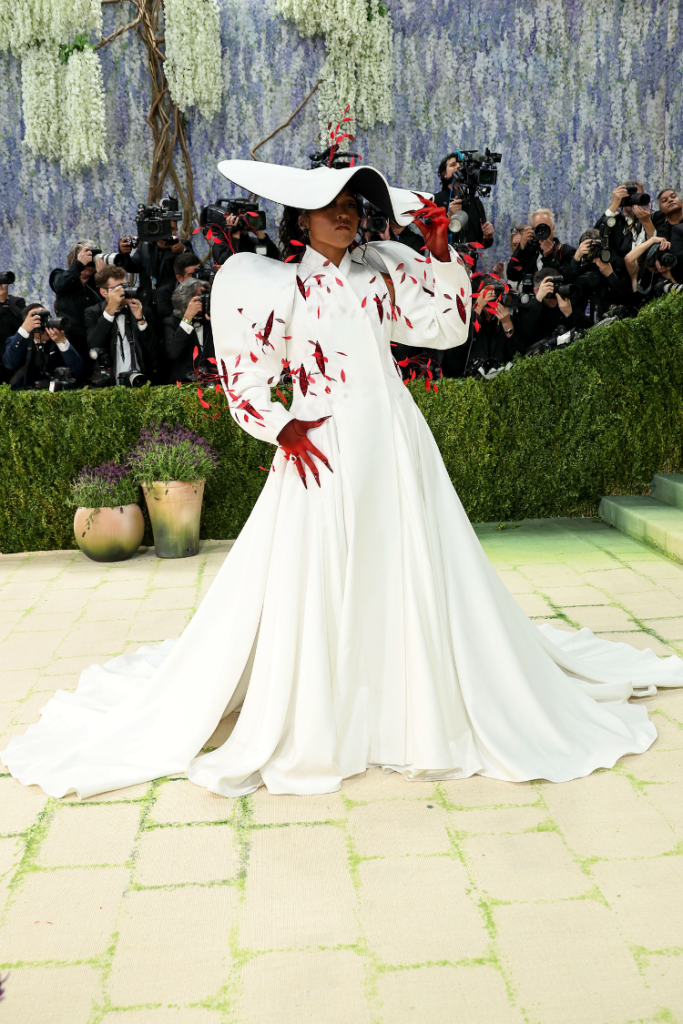
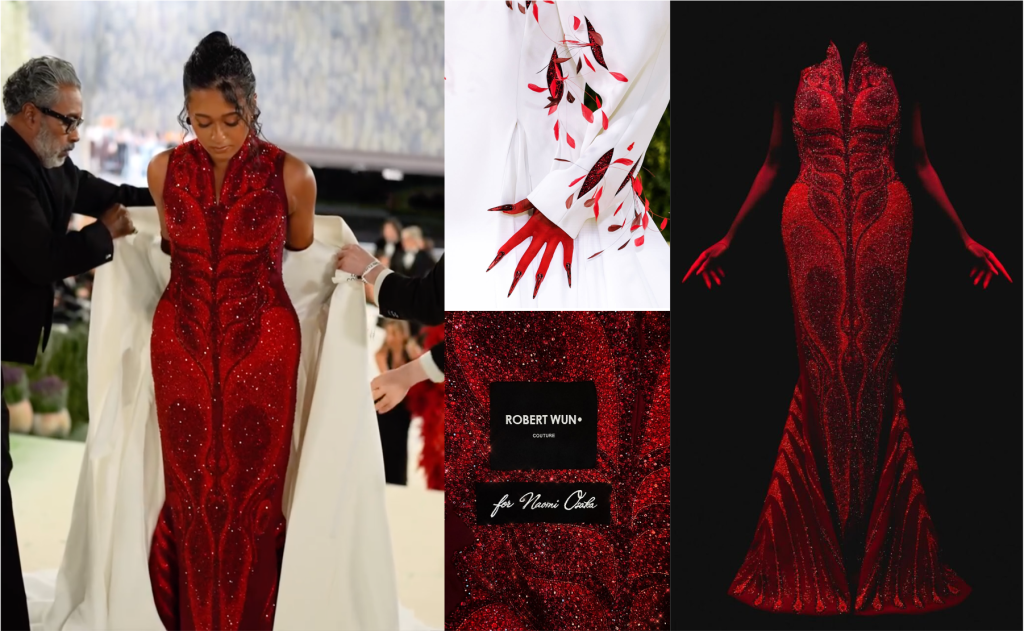
This design unfolds as a tactile, two-part performance on the steps.
The exterior ‘skin’ is a highly structured wool coat. It features spliced seams that reveal glints of crimson from within and hand-curved, stripped feathers that erupt outward- evoking a raw, anatomical skin texture to show deep red cuts and blood splatter.
Once that outer layer is shed, a breath-taking, deep-red column gown comes to light. It’s a literal anatomical map, recreating the complexities of the human form crystal by crystal.
By blending four distinct tonal shades of red across a flat surface, the designer generates a brilliant illusion of physical depth.
It required 3,280 hours of hand-embroidery, 659,000 individual placement stitches and thousands of multi-faceted Swarovski crystals.
The Classical Form: Statue-Inspired
Schiaparelli x Kylie Jenner
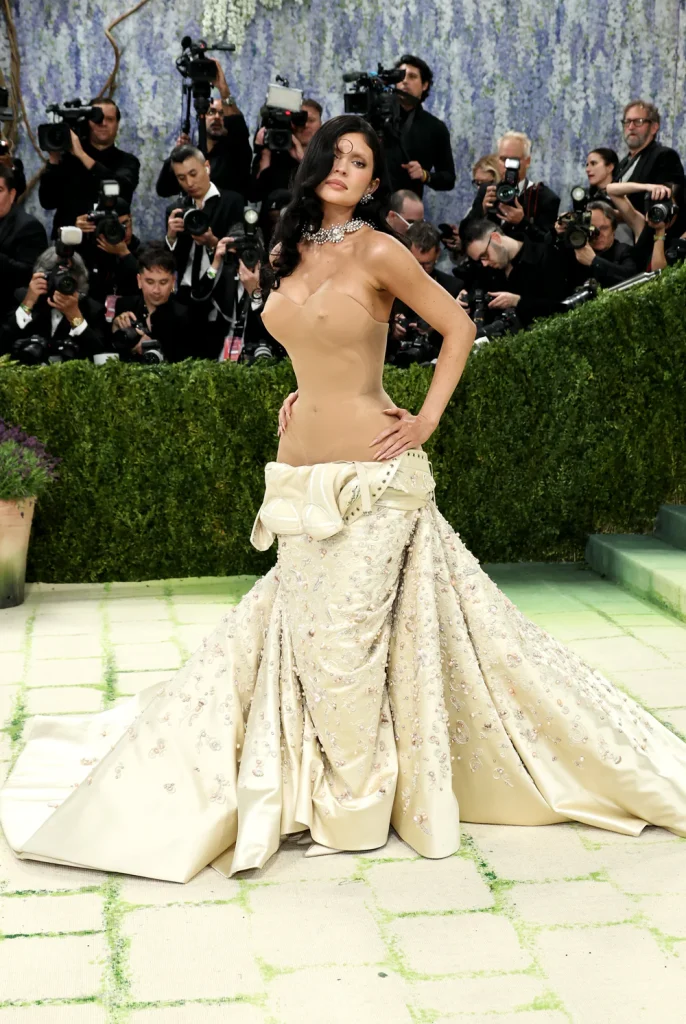
Daniel Roseberry’s custom “dropped ball gown” for Schiaparelli draws direct inspiration from the ancient Greek Venus de Milo statue. Exploring the concept of a garment caught mid-motion, the skirt pools dramatically on the ground appearing to gracefully come undone.
Bridging textile design with classical fine art, the atelier applied a hand-painted sfumato effect. This Renaissance technique generates smoky, seamless shading, giving the tan corset a brilliant illusion of depth.
It integrates trompe l’œil anatomical markers, including faux nipples and belly button, creating an intimate dialogue with the classical interpretation.
The sweeping skirt is embellished with delicate floral and botanical details in pale pink, gold, and white, requiring 11,000 hours of embroidery craftsmanship.
Fashion as Emotion
Robert Wun x Audrey Nuna
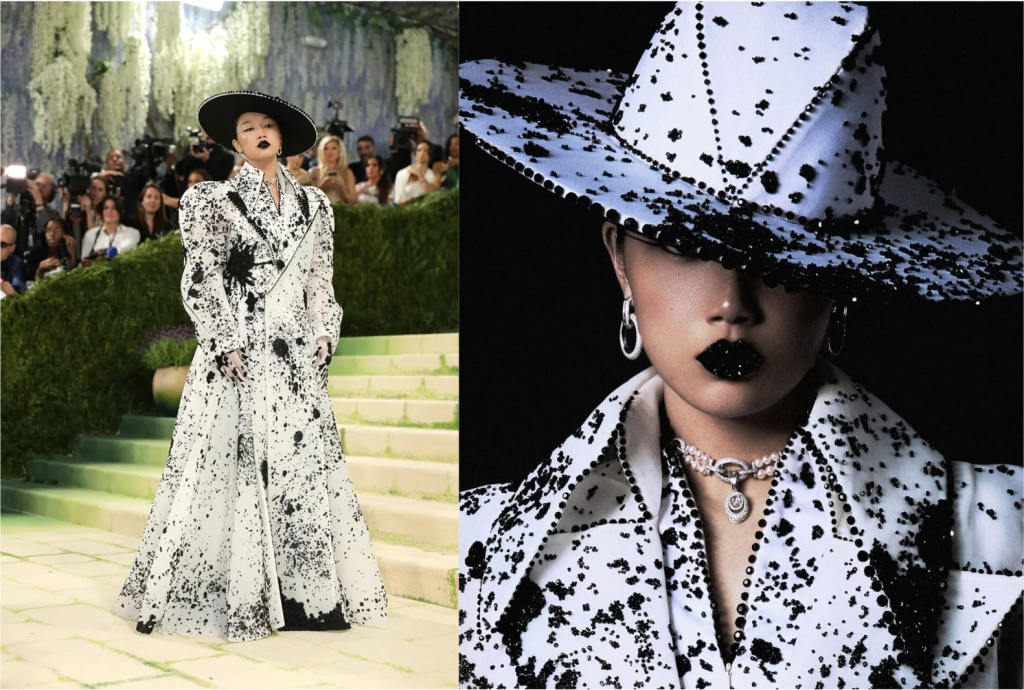
The singer/ rapper’s look centres on a stark white coat that appears to be violently splattered with pitch-black pigment. Conceptually, the piece imagines a UV light, revealing the hidden stains of the past.
It explores the powerful idea that you can build something beautiful out of past pain. By fully acknowledging its messiness, the design presents personal growth as an intimate homage to our history.
We love how it converts a deeply emotional narrative into a refined, three-dimensional masterpiece. It serves as a definitive reminder that fashion is art, emotion, and expression.
15,000 jet-black Swarovski crystals were used to mimic that chaotic, organic movement.
The Tactile Canvas
Thom Browne x Chase Infiniti
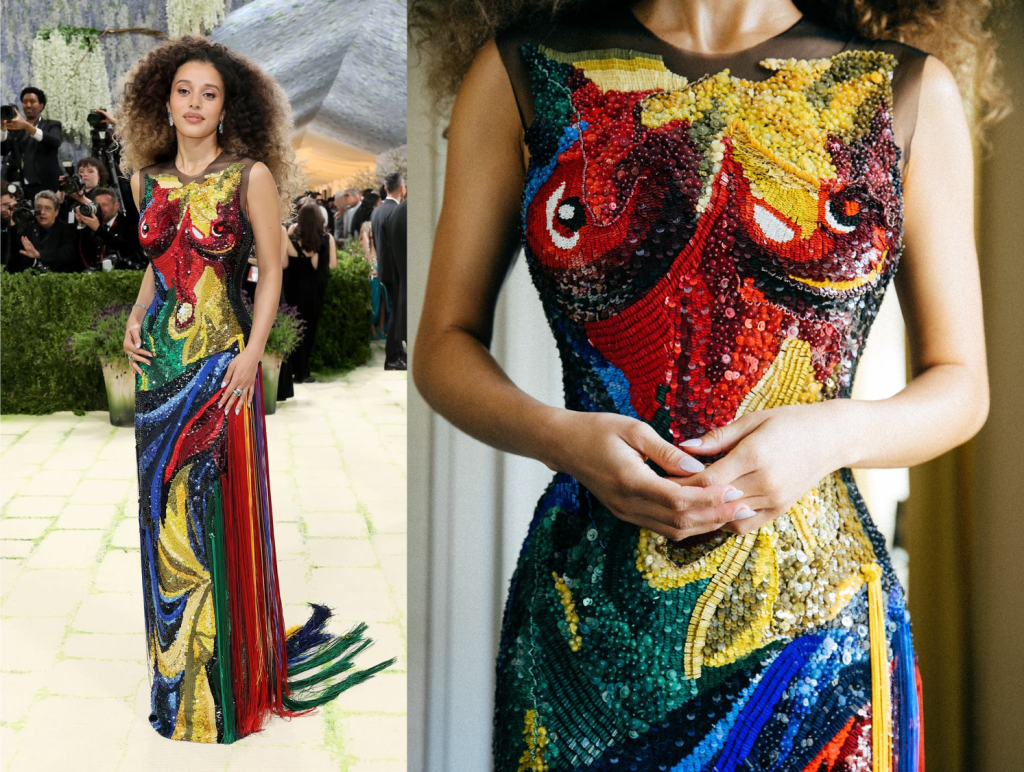
Representing “the naked body,” Chase Infiniti’s custom gown reinterprets the classical Venus de Milo statue through a fresh, fluid medium.
It reimagines the static drapery of the iconic sculpture with vibrance, celebrating the human form through a kaleidoscope of colour, because that is what bodies are- bright and colourful.
The intricate textures and embroidery techniques used here beautifully capture the classical form. And the technical precision creates a striking illusion of wet, dripping brushstrokes across the silhouette.
It features 7,000+ hours of handwork, 1.5 million stacked sequins, glass cut-beads, and tiered silk fringes spanning over 600 different colours and materials.
The Anatomical Canvas
Robert Wun x Gustav Magnar Witzøe
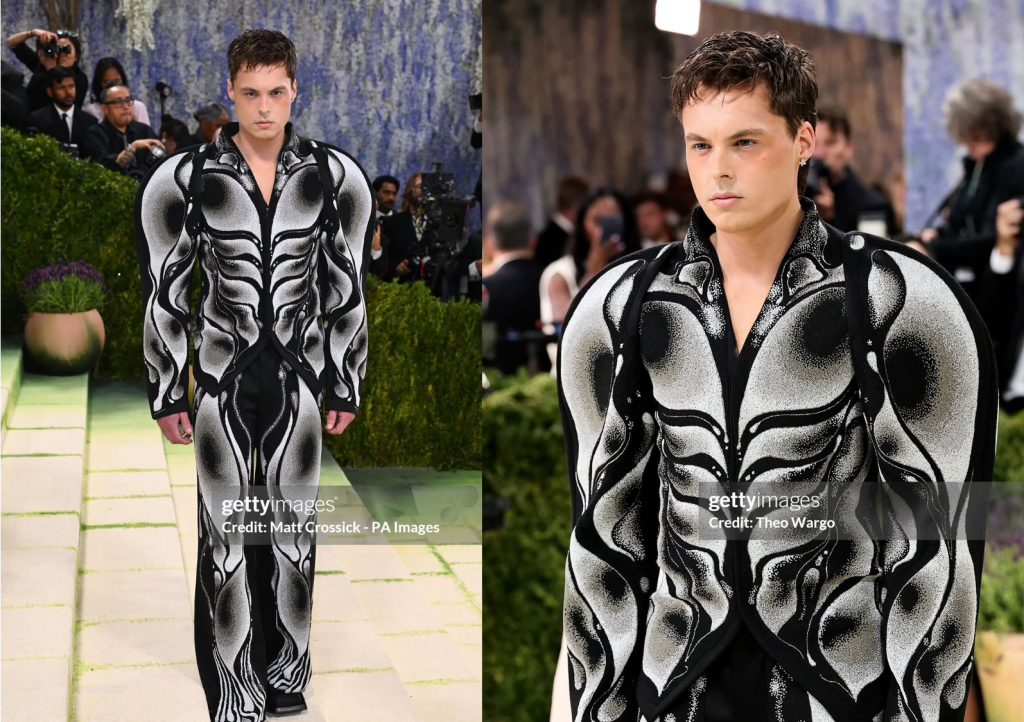
The graphic black-and-white two-piece features a mesmerizing depiction of human musculature.
It utilizes precise surface design to map out every contour of the body. A a sharp graphic layout, shifting through a flawless ombré gradient from deep black, to muted grey to stark white.
The result? A contemporary and cinematic silhouette that serves as a magnificent study in physical texture and anatomical definition.
It features over 100,000 micro matte pearls and beads.
The Living Canvas
Mugler x Emma Chamberlain
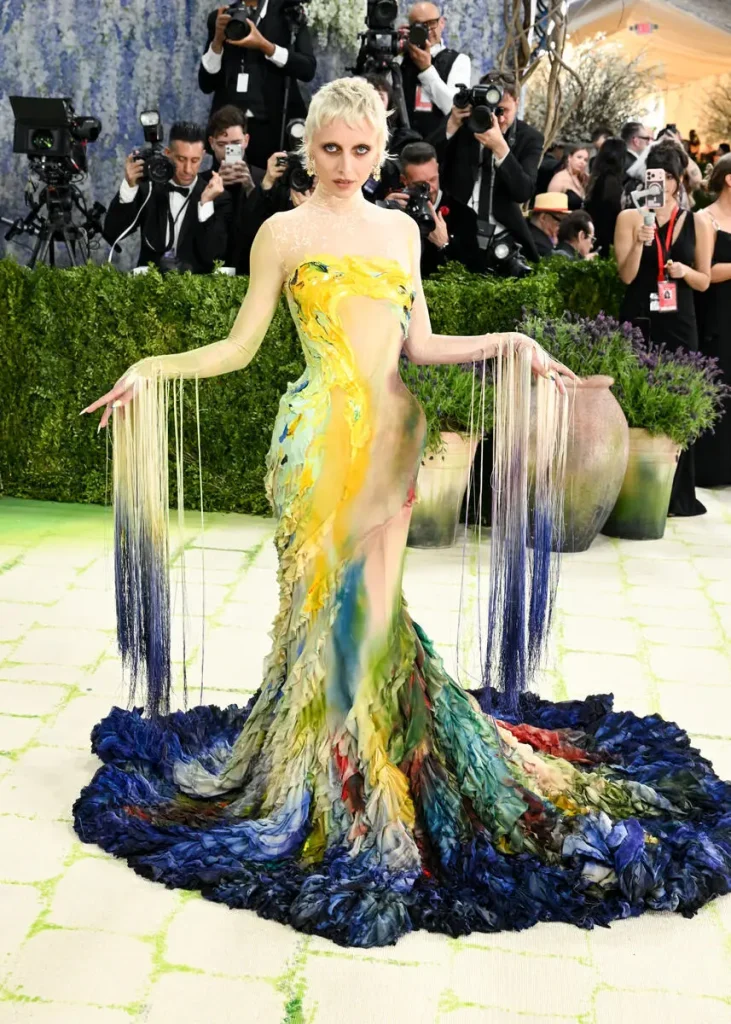
Emma Chamberlain wore a custom Mugler gown by Miguel Castro Freitas. Like a painting in motion, the design created the illusion of her emerging from an Impressionist artwork.
The piece carries a deeply personal resonance for Chamberlain, who grew up with a father who is an oil and watercolor painter. It also carries themes from her own favourite works by Van Gogh and Munch.
To bring this intimate love for painting into the physical garment, the house partnered with artist Anna Deller-Yee to hand-paint the fabric with nearly 30 custom-mixed base colours. This artisan process demanded 40 hours of hand-painting and four days of ventilated drying time, resulting in a masterclass of texture and colour transitions.
Constructed from over 150 meters of organza and georgette, the fabric bleeds from an acid yellow through green, down into deep, inky blues at the hem.
At the MET Gala 2026, these couturiers have rewritten the rules of sartorial storytelling. In bridging the gap between textile craftsmanship and fine art, they have proven that fashion, at its highest level, remains one of our most intimate and powerful forms of human expression.
Ricamour- Reimagining Embroideries
Ricamour is a bespoke embroidery and embellishment studio based in Mumbai, India. We work alongside designers- inspiring, interpreting and bringing their vision to life.
Together, we continue to expand the language of embroidery as design across fashion, costume, art, and interiors. See how we brought the iconic Moulin Rouge costume back to life!
To explore your ideas, email us at info@ricamour.com or message us on WhatsApp.
PS: Images used are for reference only. All photos belong to their original creators, photographers and fashion houses.