In the world of high-end design, most ideas begin with a simple question: what if? What if fabric could hold memory? What if something rigid could feel fluid? What if embellishment could become structure?
The difference lies in how far that question is carried.
Lately, at Ricamour, we find ourselves returning to a set of ideas- from manipulated drapes and engineered textures to visual illusions and material explorations.
We have curated seven of these concepts that fuel our creative fire and challenge the way we approach design.
1. The Drama of the Drape
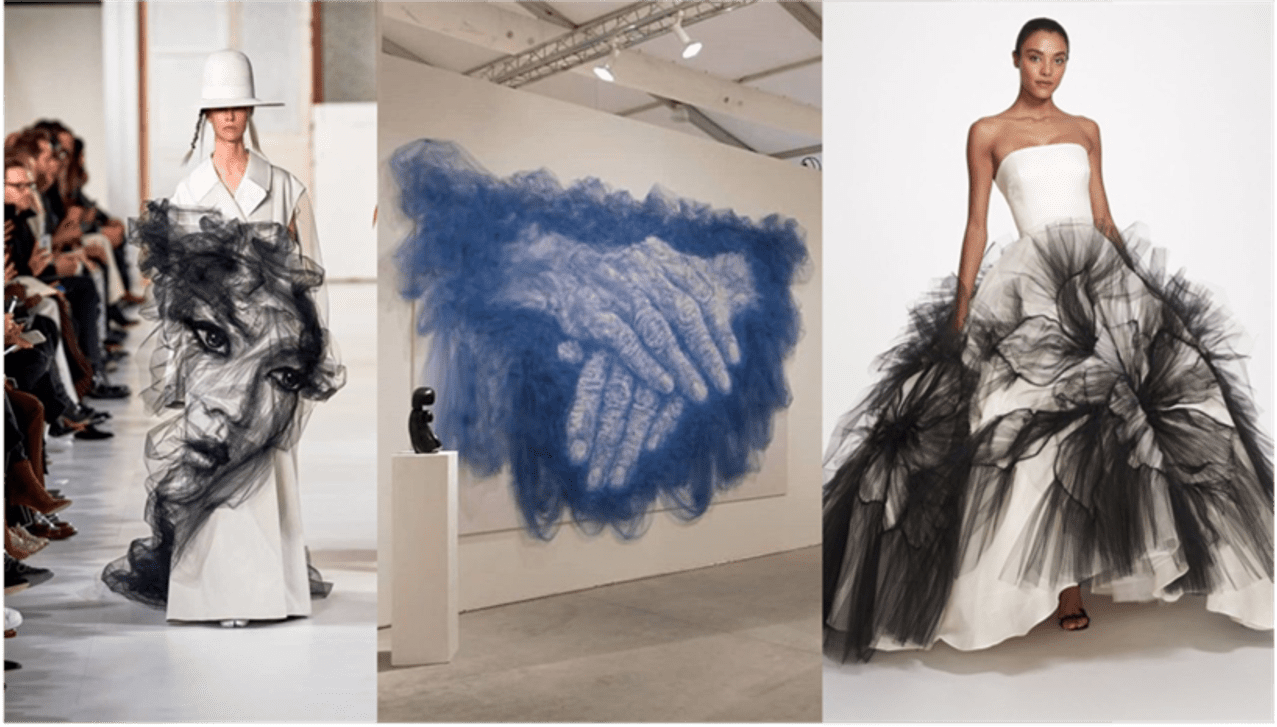
We have always been fascinated by fabric manipulation- specifically when lightweight materials are engineered to create a heavyweight impact.
A defining reference for this is Benjamin Shine’s work for Maison Margiela (2017). By folding and ironing a single piece of black tulle into a hyper-realistic face, Shine moved beyond traditional draping to what he calls ‘painting with fabric.’
We see a similar energy in Marchesa’s oversized, dramatic tulle florals. It’s about taking a material as humble as tulle and giving it a soul through precision-based manipulation.
2. Art meets Architecture meets Fashion
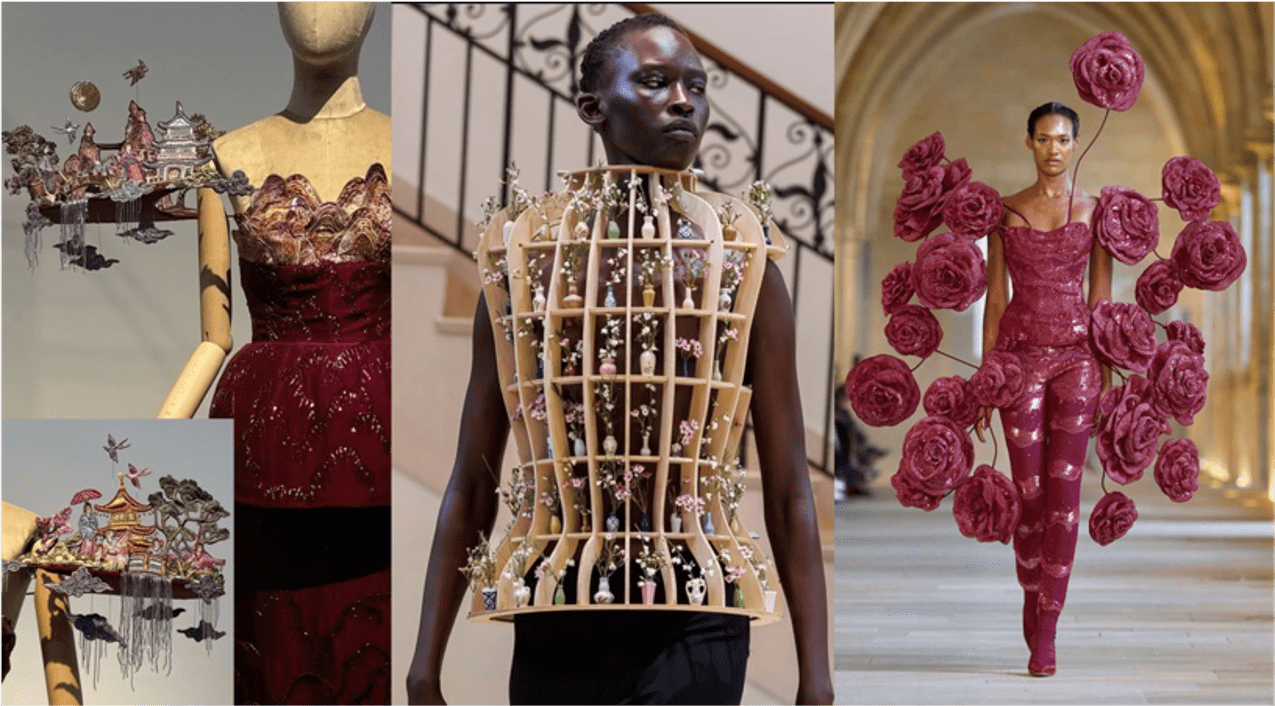
This is where the line between spatial design and fashion blurs.
Daniel del Valle’s bodice- constructed to look like a wooden trinket shelf complete with tiny vases- is wearable art.
We see that same architectural rigour in Ashdeen’s work where a three-dimensional mythical world is worn literally on a sleeve. All hand-embroidered with threads, bullion and beads.
Rahul Mishra’s sculptural pieces hold their form through meticulous embroidery coupled with metal-craft techniques.
3. The Fluid Future
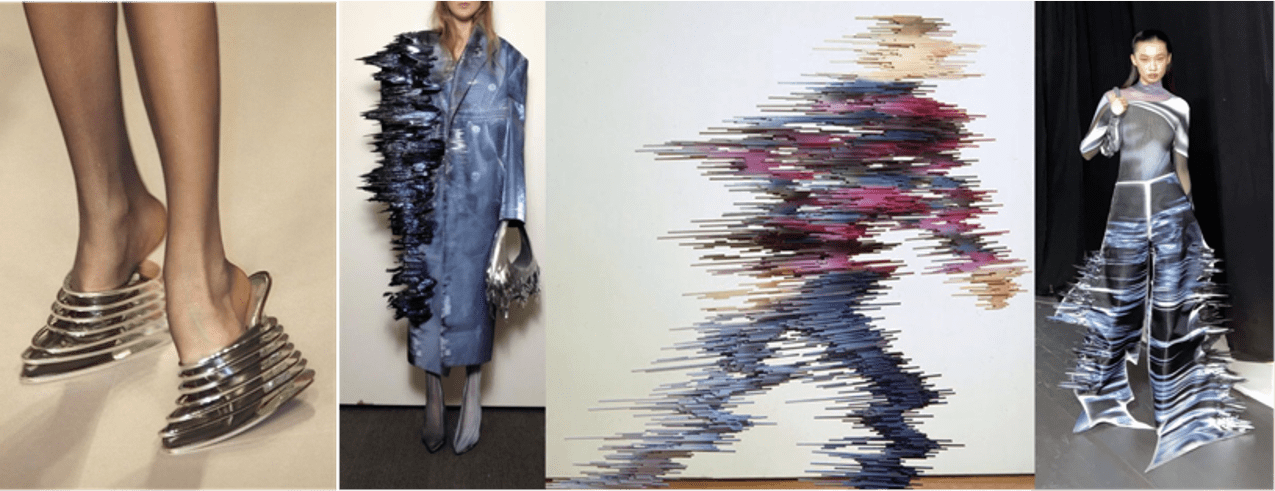
We’re watching Chinese designers like Vicki Tsang and Di Yi (Gnastiy) redefine what ‘futuristic’ looks like. Their work utilizes 3D printing to create a ‘stuck in fluid’ effect. We are all for using technology to produce something that feels entirely organic.
We see a similar energy in Ryan Johnson’s series of figures made of wood and paint; they look like people zapping between dimensions.
The idea? Capturing a state of motion within a static material.
We also love the Paco Rabanne (1998) shoes for their modern, futuristic silhouette. High concept, simple design.
4. Hyper-realism
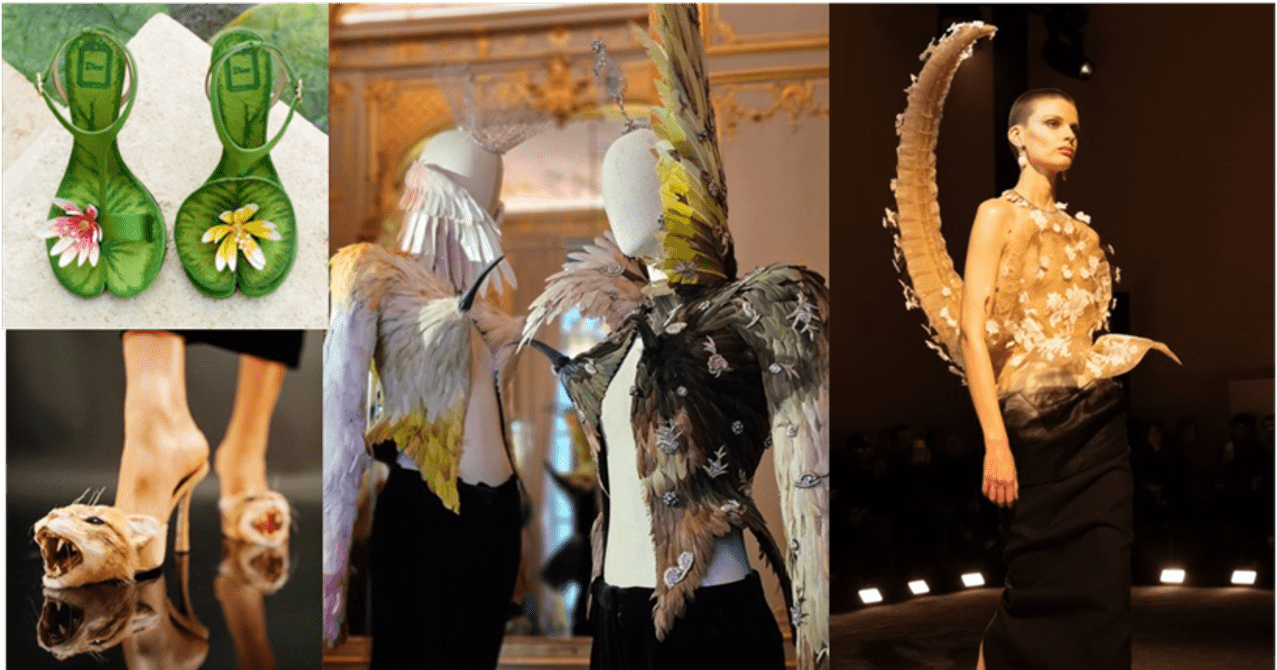
Schiaparelli broke the internet with its lion and leopard heads, but the concept of hyper-realism continues to fascinate us. We love the house’s SS26 recreation of nature to create couture.
From teeth-baring, lifelike cat-head shoes complete with whiskers to scorpion tails and bird beaks, this is detailing at its peak.
Dior’s lotus shoes follow a similar path. It’s about recreating nature with such precision that the viewer momentarily suspends disbelief.
It makes us stop questioning the ‘what’ and start obsessing over the ‘how.’
5. Body as Canvas
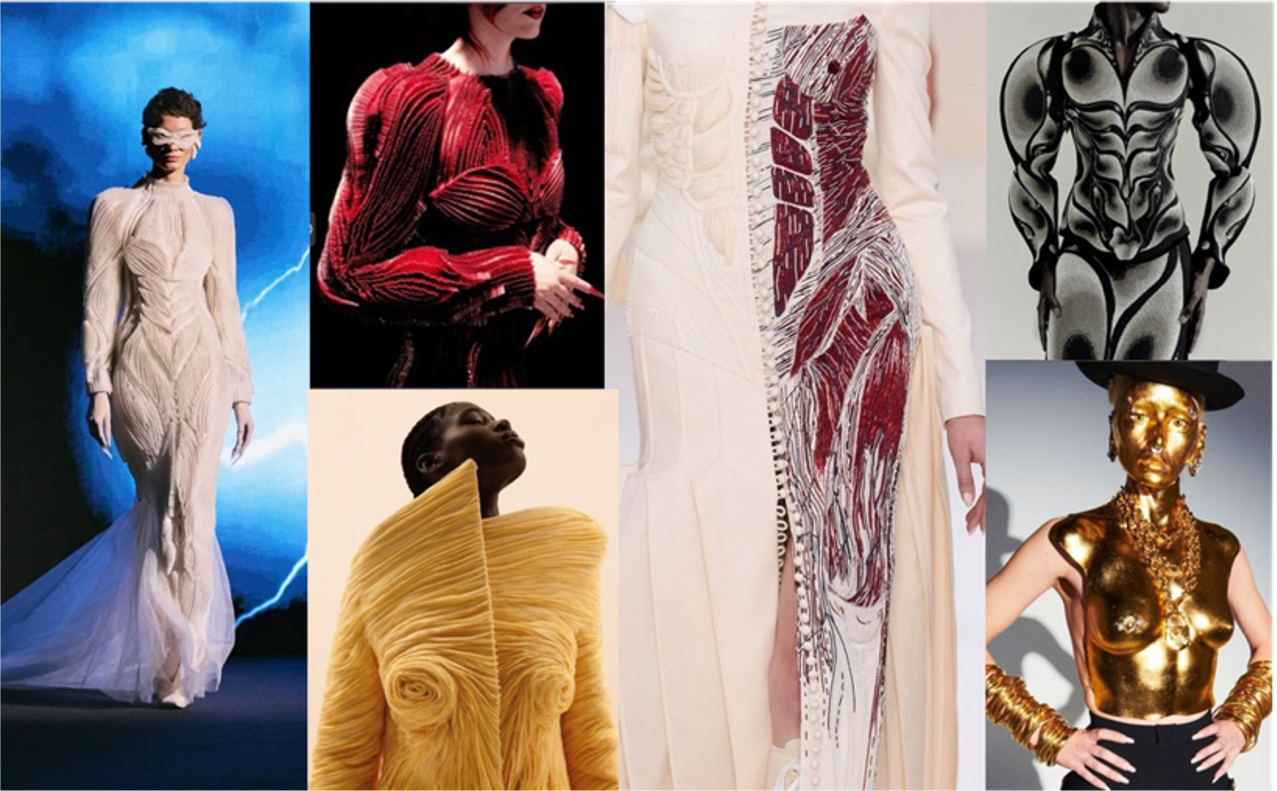
The human body is the ultimate canvas, but we have also seen designers treating it as a literal blueprint.
Whether it’s Robert Wun’s construction brilliance with thousands of standing bugles or Thom Browne’s obsessive detailing with threads and beads, the focus is on human anatomy as a primary guide.
From Sandra Mansour’s poetic pleating to Schiaparelli’s skeletal metalwork, it’s about tracing the body’s natural form and translating them into a design language.
It may sometimes be literal, sometimes abstract- but always deeply poetic. This exploration also aligns with the MET Gala’s theme this year. We can’t wait to see all the avant-garde interpretations.
6. The Art of Illusion
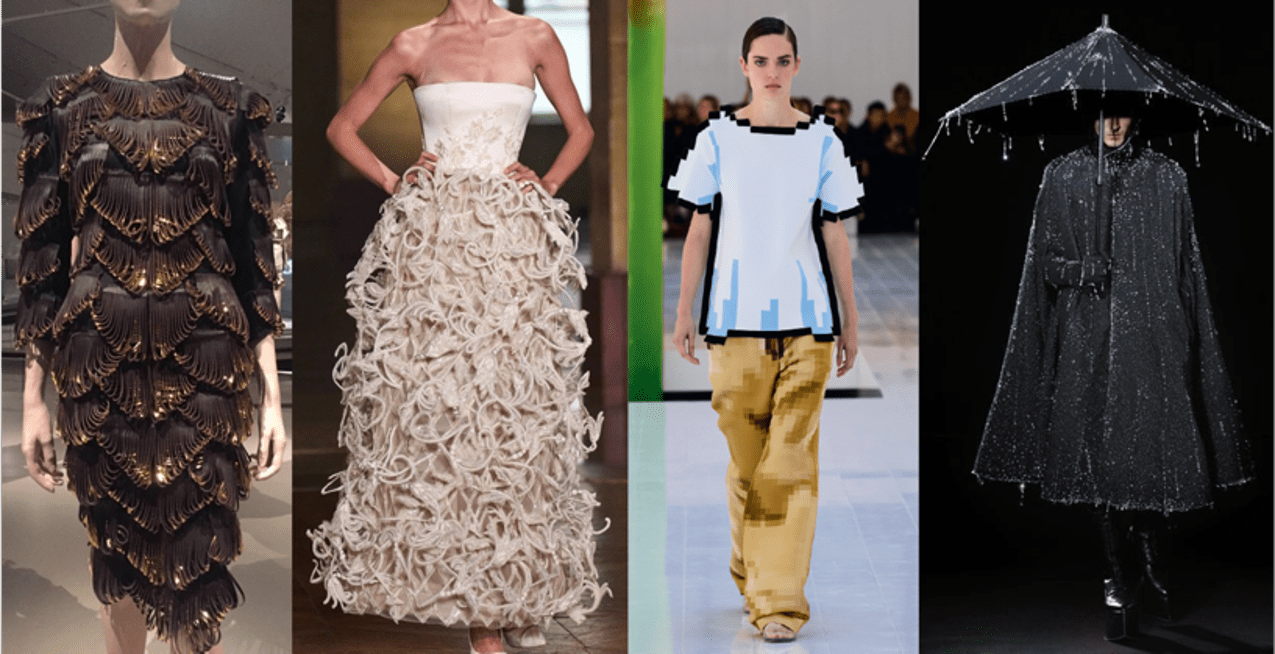
Good design draws attention. Avant-garde design makes you question what you’re seeing.
Iris van Herpen made pleats with specially treated leather (coated only on one side with shiny metallic foil) to create a design that shifts with movement.
Loewe’s SS23 pixelated look brought a digital ‘glitch’ into the physical world.
Georges Hobeika used the technique of appliqués to create floating 3D lines. Robert Wun’s ‘raincoat’ used clear crystals to make the fabric itself appear drenched.
The Art of illusion transforms the body into a walking performance. It’s about engineering an unreliable narrative.
7. Unconventional Materials
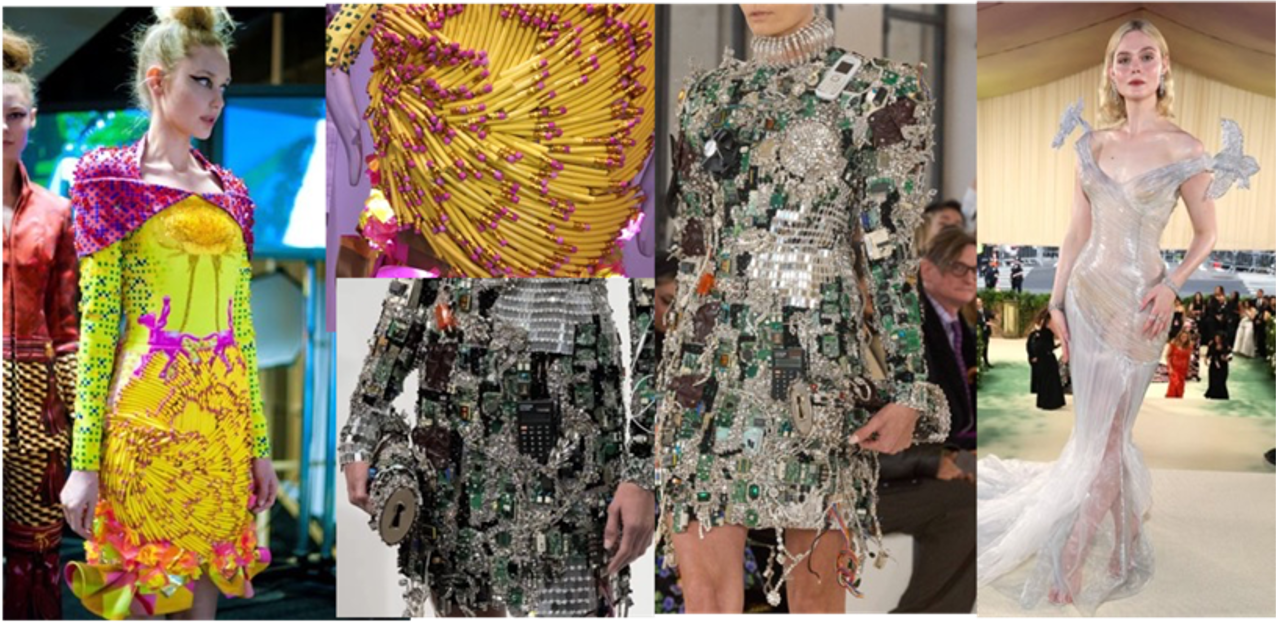
Sometimes innovation is simply about looking at familiar materials differently.
Mary Katrantzou (2012-13) used a swirl of pencils. The idea? A pencil skirt with actual pencils on it.
Schiaparelli (SS24) incorporated old phones, mother boards, CPU coolers and chipsets along with crystals. A mesh between artistry and technology.
Balmain experimented with resin to create glass-like textures.
Proof that avant-garde is a result of challenging tradition and envisioning a masterpiece.
At our studio, we are constantly dissecting these concepts to see how they can be pushed further. Whether we are experimenting with futuristic textures or structural illusions, the goal remains the same: to create a moment of wonder.
We hope they spark the same creative fire in your studio that they do in ours.
About Ricamour Embroideries:
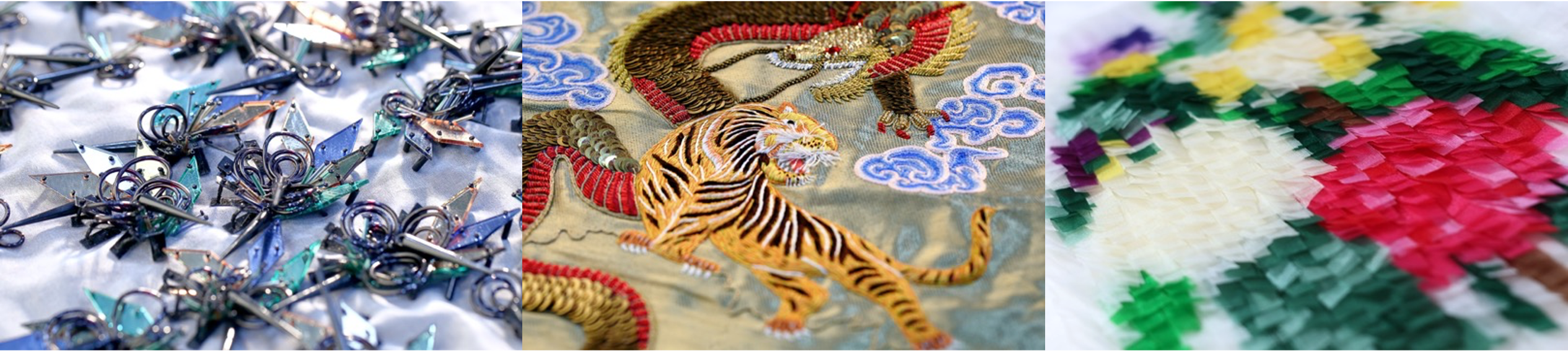
Ricamour Embroideries is a bespoke hand-embroidery and design studio based in Mumbai. We work with designers and artists around the world, reimagining embroidery for fashion, interiors and art.
Curious about our work? Explore our archives and designs that our skilled artisans brought to life. Also see how we brought the iconic Moulin Rouge costume back to life! If it interests you, understand Why Sampling Defines the Embroidery Process
To explore new ideas or custom embroideries, email us at info@ricamour.com or message us on WhatsApp.
PS: Images shown are sourced for visual reference and inspiration. All rights remain with the original creators.